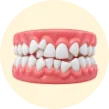
 01
Crowding
Overlapping or twisted teeth when there is not enough room.
Aligners create space and gently rotate teeth into line.

Invisalign / Do You Qualify For Invisalign®?
Invisalign straightens teeth with clear, removable aligners instead of brackets and wires. Find out what it can treat, take a quick self-check, and see when braces may be a better fit.

If you see your smile here, your free 3D scan will show you exactly what is possible.
Take the Invisalign candidacy self-check
01Overlapping or twisted teeth when there is not enough room.
Aligners create space and gently rotate teeth into line.
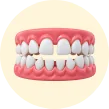 02
Noticeable gaps between teeth.
Aligners move teeth together to close spaces evenly.
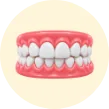 03
Upper teeth overlap the lower teeth too far.
Aligners and attachments guide teeth into a healthier overlap.
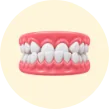 04
Lower teeth sit in front of the upper teeth.
Aligners, sometimes with elastics, bring the bite into balance.
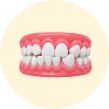 05
Some upper teeth bite inside the lower teeth.
Aligners shift teeth so upper and lower meet correctly.
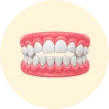 06
Front teeth do not meet when you bite down.
Aligners guide the front teeth together so they meet.
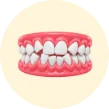 07
Individual teeth turned out of position.
Attachments give aligners grip to turn teeth into place.
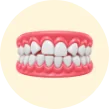 08
The center lines of the upper and lower teeth do not line up.
Aligners shift teeth so the center lines match up.
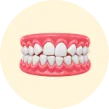 09
Teeth that drifted back after earlier orthodontic treatment.
Aligners bring shifted teeth back, often in less time.
This is not a diagnosis, just a helpful starting point before your consultation.
Based on your answers, clear aligners could be a great fit. Your free consultation and digital scan will confirm it and show you what your treatment could look like.
Invisalign works best when aligners are worn almost all day. If that feels hard to commit to, fixed braces do the work for you. Come in and we will compare both options for your smile.
Teeth move best in a healthy mouth. We can take care of cavities or gum concerns here in our office, then plan your Invisalign treatment as soon as you are ready.
When adult teeth are still coming in, the best time to start can vary. Our doctors will check your child's growth and tell you honestly when aligners make sense.
Teens choose Invisalign to stay confident at school and in activities. Adults prefer its discreet look at work and in social settings.
Freedom and confidence during busy teen years.
Professional, flexible, and nearly invisible.

Invisalign is most effective for mild to moderate orthodontic needs. Your doctor evaluates whether your concerns are a good match during your consultation.
Some conditions respond better to traditional braces. Severe misalignment, advanced bite correction, or jaw-related concerns often need stronger control for long-term stability.

Every plan is customized. Digital scans create a detailed roadmap, and progress is tracked at regular visits.
What clear aligners are, how they work, and why patients love them.
Read moreInvisalign® ProcessEvery step from your free scan to your final retainer.
Read moreInvisalign® Vs. Fixed BracesHow aligners and braces compare on comfort, time, and lifestyle.
Read moreInvisalign® FAQsStraight answers to the questions we hear most.
Read moreInvisalign® CostPricing, ways to pay, and a payment estimator.
Read moreYour free consultation and 3D scan give you a clear answer, with no obligation.
Have a question that is not covered here? Call us at (281) 528-1140 or see all Invisalign FAQs.
There is no upper age limit for Invisalign. What matters most is that your teeth and gums are healthy. Many of our Invisalign patients are adults who always wanted straighter teeth or noticed their teeth shifting over time.
Many teens do very well with Invisalign. We look at your teen's bite, growth, and daily habits during the consultation and talk honestly about whether aligners or another option will give the most predictable result.
In many cases, yes. Invisalign can correct many overbites, underbites, crossbites, and open bites, sometimes with the help of small attachments or elastics. Severe bite problems may need braces or additional treatment, which we will discuss with you.
Yes. Shifting after braces is very common, especially if retainers were not worn long term. Invisalign is often a great way to bring teeth back into line, and treatment for relapse can be shorter than the original orthodontic care.
Usually, yes. Crowns, fillings, and bridges are evaluated during your consultation. Some restorations need small adjustments to the plan, and your doctor will explain anything that affects your treatment.
Yes. Teeth move best in a healthy mouth, so any cavities or gum concerns are treated before aligners begin. We can take care of these here in our office so you can start Invisalign as soon as possible.
If aligners are not the best choice for your smile, we will tell you why and walk you through other options, such as traditional braces. Our goal is the most predictable, healthy result, not a specific product.
Yes. Invisalign treats far more cases than it did a few years ago, including many patients who were once told no. Your free consultation and 3D scan give you a clear answer at no cost.